The Index of Economic Freedom
Preface
The American economy is resurgent. Despite the familiar chorus of naysayers, the facts tell a different story. With decisive regulatory reform, meaningful tax relief, and a clear commitment to pro-growth economic policies, the Trump Administration has been yielding impressive results. The U.S. stock market is near an all-time high, and gross domestic product has grown strongly by more than 4 percent in recent quarters, all while inflation, interest rates, and unemployment remain stable. The American economy is once again demonstrating what it can achieve when government steps back and the American people step forward.
President Trump promised a sharp break with the decline of his predecessor’s era—defined by outdated and counterproductive regulatory, tax, and trade policies. He has delivered. His pro-growth agenda has set the stage for America’s impressive comeback as the world’s “hottest” economy and served as a necessary corrective to the failed experiment of “Bidenomics,” restoring confidence, competitiveness, and momentum.
This edition of the Index of Economic Freedom confirms what we see unfolding in real time: When economic freedom advances, prosperity follows.
The United States recorded the greatest improvement in the 2026 Index among advanced economies. America’s score has risen by nearly three points from last year, reversing a five-year decline and marking the most significant improvement since 2001—one of the strongest gains in the Index’s 32-year history.
That progress is not accidental. It reflects the Trump Administration’s pragmatic pro-growth economic strategy—lowering the cost of doing business, advancing and spreading prosperity, and enhancing long-term competitiveness—which has placed our country at the dawn of a Golden Era. Today, by that “dawn’s early light,” we can clearly see the prosperous, energetic future it portends even as many other countries remain stuck in a slow-growth trap.
But we must be clear: America is more than an economy. It is a nation. This Golden Era will be measured not only by stronger rankings and rising markets, but also by whether its promise is felt at the kitchen table by working families across this country.
Economic freedom is not an end in itself. It is a means to human flourishing—to what the Founders called the pursuit of happiness and what Aristotle described as eudaimonia. Conservatism seeks not merely efficiency, but the good, the true, and the beautiful.
Free markets must be part of our message of prosperity. As the Index of Economic Freedom has demonstrated year after year, prosperity, education, and the environment all thrive in countries that support free markets, the rule of law, private property, and limited government—particularly when institutions of civil society are flourishing.
Yet markets do not exist in a vacuum. Economic freedom must always serve families, communities, and the permanent things—ordered liberty, personal responsibility, and the dignity of work. Properly understood, economic freedom strengthens national security, nourishes civil society, and improves the quality of life for all citizens. It is a cornerstone of a healthy society. The Index of Economic Freedom remains one of the most important tools in defending and advancing that cornerstone.
This edition carries special meaning for The Heritage Foundation. In 2025, we lost our founder, Dr. Edwin J. Feulner—our longest-serving president, a statesman of the conservative movement, and the architect of an institution that reshaped American public policy. What began as a small outpost for conservative ideas became, under Ed’s leadership, the intellectual arsenal of the Reagan Revolution and a battleship for liberty in the decades that followed.
Ed founded the Index of Economic Freedom in 1995 and never ceased to contribute his insights to and provide inspiration for this worldwide, country-by-country annual benchmark study, describing it as one of the “crown jewels” of The Heritage Foundation and frequently presenting its findings to policymakers here in Washington and across the world.
The rankings in this Index will change over time—we hope for the better—in all countries everywhere, but the fundamental message of the Index will not change. As Ed said in introducing the first Index in 1995, in striving for peace and prosperity, “Freedom is what counts most.”
In dedicating this edition of the Index of Economic Freedom to Ed, we at The Heritage Foundation will honor his life the best way we know how: by carrying his mission forward with courage, integrity, and resolve. We will never forget his leadership.
“Onward,” and on offense.
Kevin D. Roberts, PhD
President
The Heritage Foundation
February 2026
Executive Highlights
Economic freedom is an essential aspect of human dignity, autonomy, and personal empowerment. Equally important, it provides a proven formula for economic progress and success. Economic freedom is about much more than a business environment in which entrepreneurship and prosperity can flourish.
With its far-reaching impacts on various aspects of human development, economic freedom empowers individuals and families with choice and opportunity, nourishes other liberties, advances national security, and ultimately improves the overall quality of life. Greater economic freedom really means better economic governance and greater security.
The blunt truth is that economic freedom is the cornerstone of a healthy society with growing families and vibrant markets. Free enterprise and well-functioning markets are as essential today as they were when Ronald Reagan and Margaret Thatcher used them to rescue their nations’ economies and win the Cold War.
Economic freedom is not just about economic efficiency for its own sake; it is a powerful means by which to further human flourishing. And work is more than a means of survival; it is a source of purpose and prosperity. Economic freedom is key to an industrious economy that rewards service and innovation, respects private ownership, and strengthens family formation and stability. A healthy economy should foster earned flourishing and remove obstacles that stifle opportunity.
As the country-by-country trends reported in the 2026 Index of Economic Freedom demonstrate, the need to revitalize and advance economic freedom has never been greater than it is today.
Key Findings of the 2026 Index of Economic Freedom
- The direction and orientation of policy are important for economic freedom because there is a robust relationship between improving economic freedom and achieving higher economic dynamism. Especially notable in this critical context is that among the world’s fastest-growing large, advanced economies, the United States is the one whose economic freedom has improved the most in the past year.
- The United States’ economic freedom score is 72.8, making its economy the 22nd freest in the 2026 Index of Economic Freedom. Its rating has increased by 2.6 points from last year, ending the precipitous five-year decline of America’s economic freedom. Gains in monetary freedom, government spending, fiscal health, and investment freedom have outpaced the lower score in trade freedom, reflecting the positive impact of major regulatory and tax reforms on economic growth, investment, and business confidence.
- This noteworthy improvement also marks America’s biggest score advancement since 2001 and the second-best in the U.S.’s 32-year history in the Index. The Trump Administration’s pragmatic pro-growth economic strategy—lowering the costs of doing business, advancing and spreading prosperity, and enhancing long-term competitiveness—has yielded the strongest economic growth rate recorded in recent years.
- However, many countries around the globe are now at a crossroads. A nation’s true capacity for lasting growth and prosperity hinges on the quality of its institutions and economic system. The question is how soon and decisively they will recognize the paramount need to correct their current policy course and reinvigorate their commitment to preserving and advancing economic freedom, which has proven to be key to human flourishing and lasting prosperity.
- The 2026 Index, which considers economic policy developments and conditions in 184 sovereign countries over the past year, reveals a world economy that, taken as a whole, remains “mostly unfree.” Although the global average economic freedom score has bounced back from its score of 58.6 in 2024 (at that time the lowest since 2010), it has increased by only 0.2 point to 59.9 over the past year from the 59.7 recorded in the 2025 Index.
- Globally, fiscal soundness has continued to deteriorate. Rising deficits and mounting public debt in many countries have undermined and will likely further undercut their overall productivity growth and ultimately lead to economic sluggishness rather than vibrant growth. The impact of restrictive tariffs on the global economy has been far more muted than feared in light of increased investment in such critical sectors as, among others, energy and artificial intelligence (AI). The absence of tariff retaliation by most countries has also offset the impact of tariffs on trade flows and growth worldwide.
- A return to “business as usual” will not suffice. In addition to the impacts of ill-managed public finance, countries are facing many long-term structural challenges in the policy areas of transparency, efficiency, openness, and government effectiveness.
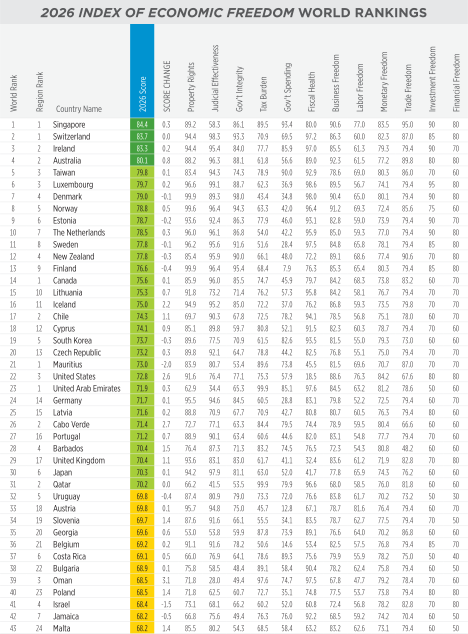
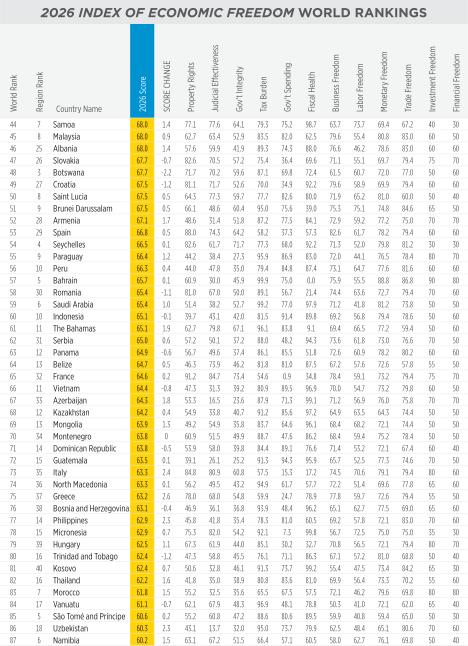
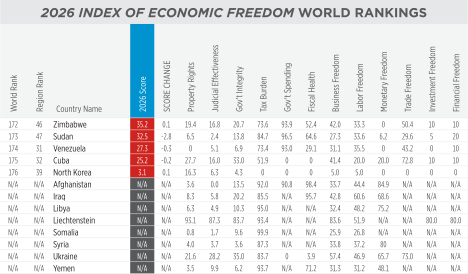
- As shown in the ranking table for the 176 countries rated in the 2026 Index, four countries (up from three in the previous year) recorded economic freedom scores of 80 or more, putting them in the ranks of the economically “free”; 27 countries earned a designation of “mostly free” by recording scores of 70.0 to 79.9; and an additional 58 countries were considered at least “moderately free” with scores of 60.0 to 69.9. Thus, a total of 89 countries, or slightly more than half of the 176 countries graded in the 2026 Index, have institutional environments in which individuals and private enterprises benefit from at least a moderate degree of economic freedom in the pursuit of greater economic development and prosperity.
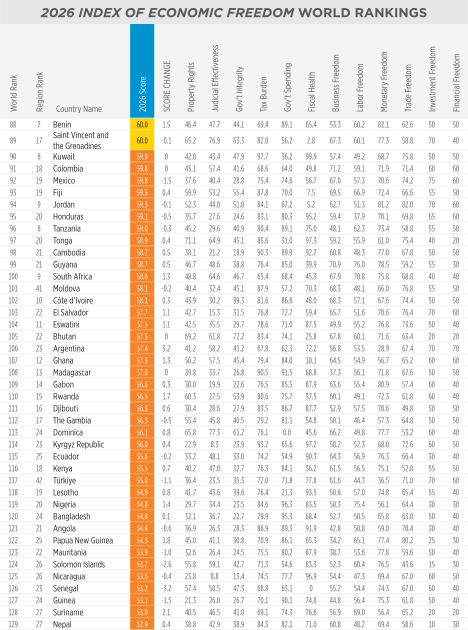
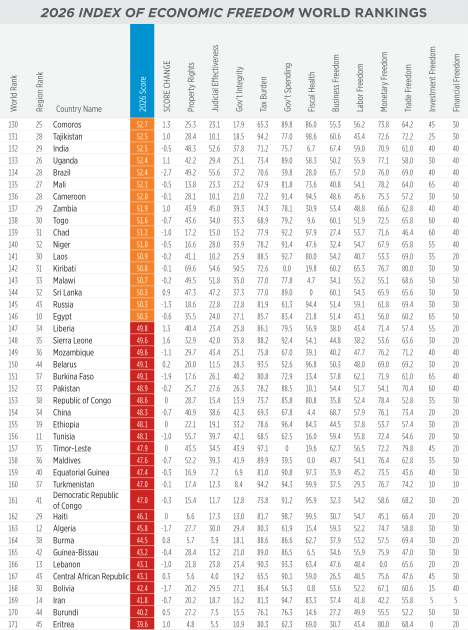
- On the opposite side of the spectrum, about 50 percent of the countries graded in the 2026 Index (87 economies) have registered economic freedom scores below 60. Of those, 57 economies are considered “mostly unfree” (scores of 50.0 to 59.9), and 30 countries, including China and Iran, are in the economically “repressed” category.
- Within the top 10 rankings, a notable reshuffling has taken place. Singapore continues to be the world’s freest economy, demonstrating a consistently high level of economic resilience and prosperity. Switzerland is the world’s second freest economy, followed by Ireland, Australia, and Taiwan.
- Along with the impressive performance of the United States, Argentina’s economic freedom rating has increased by 3.2 points from last year, which makes Argentina the best-performing country in the 2026 Index. October 2025’s decisive midterm election victory provided reform-minded President Javier Milei with concrete support and greater momentum for continuing to transform Argentina’s economy. Milei’s reform agenda has yielded notable and measurable progress. Management of public finance has been improved and made more disciplined as various fiscal, monetary, and regulatory reforms have reduced the size and scope of government. Argentina’s overall economic freedom score has been improving significantly over the past three years under President Javier Milei compared to global and regional averages.
- China’s economic freedom score is 48.3, making its economy the 154th freest in the 2026 Index of Economic Freedom. Its rating has decreased by 0.7 point from last year, and China’s economy continues to be classified as “repressed” according to the 2026 Index. The Chinese Communist Party directly controls economic activity. The regulatory framework remains complex and uneven. The state-controlled financial sector’s extensive use of subsidies and credit controls continues to undercut efficiency and productivity. Businesses and the government have been struggling with high youth unemployment, persistent deflationary pressures, and a real-estate crisis that continues to act as a significant drag on growth.
- There continues to be a clear relationship between improving economic freedom and achieving higher economic dynamism as well as greater overall well-being. No matter what their existing level of development may be, countries can measurably boost their economic growth by implementing steps to increase economic freedom through policies that reduce taxes, rationalize the regulatory environment, open the economy to greater competition, and fight corruption.
- The standard of living, measured by incomes per capita, is much higher in economically freer countries. Countries rated “free,” “mostly free,” or “moderately free” in the 2026 Index generate incomes that are more than double the average levels in other countries and more than three times higher than the incomes of people living in economically “repressed” countries.
- As documented once again in the 2026 Index, economic freedom also correlates significantly with overall well-being, which includes such factors as health, education, the environment, innovation, societal progress, and democratic governance. All in all, the ongoing recovery remains uneven and uncertain with strikingly different outcomes across countries, sectors, and demographic groups. Output and employment gaps persist in many countries, particularly in emerging markets and developing economies, suggesting that countries face vastly different policy challenges during recovery and beyond.
12 Economic Freedoms: A Global Look
Rule of Law
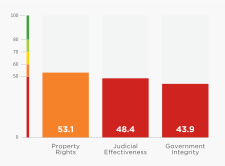
On average, of the four pillars of economic freedom on which Index grading is based, the rule of law indicator has the lowest scores on a scale of 0 to 100. This reflects the systemic corruption of government institutions in many countries. Without a robust rule of law, business owners and entrepreneurs find it difficult to know what to expect when making economic decisions.
Government Size
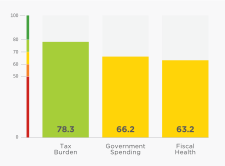
The average top individual income tax rate for countries in the 2026 Index is about 30 percent. The average top corporate tax rate is about 25 percent. The average overall tax burden as a percentage of gross domestic product (GDP) is about 20 percent. Government spending continues to average more than 30 percent of GDP, but gross public debt now averages above 65 percent.
Regulatory Efficiency
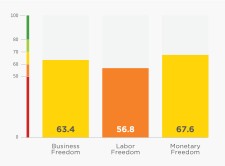
As with all other factors, the difference between high-scoring countries and low-scoring countries can be like the difference between night and day. The notable countries by average regulatory efficiency score include Singapore, Switzerland, Taiwan, Denmark, and Finland. The worst offenders in descending order are Sierra Leone, Cuba, Zimbabwe, Sudan, Venezuela, and North Korea.
Open Markets
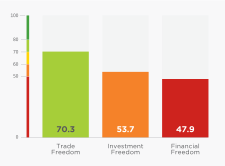
The fact that investment policy measures in many countries are geared toward promotion of sectoral investment rather than general market openness contributes to a global investment freedom score of just 53.4. The global score for financial freedom is the second lowest of the three open markets indicators at 48.1. Unfortunately, government interference in the financial sector has become pervasive in many countries.
Economic Freedom World Rankings Table (1 of 5)
Economic Freedom World Rankings Table (2 of 5)
Economic Freedom World Rankings Table (3 of 5)
Economic Freedom World Rankings Table (4 of 5)
Economic Freedom World Rankings Table (5 of 5)
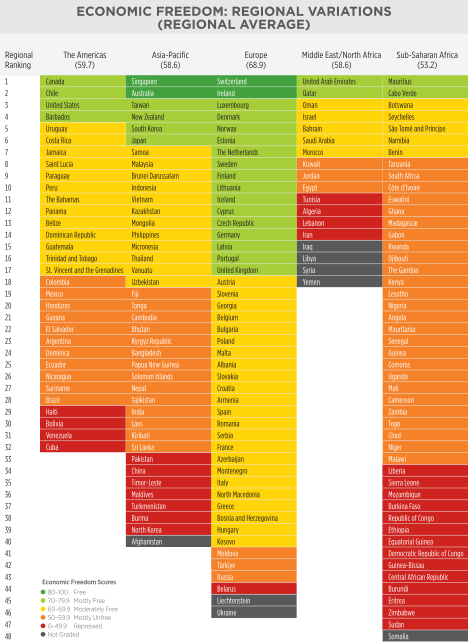
Economic Freedom Regional Variations Table
The 12 Economic Freedoms
The Index of Economic Freedom, an annual cross-country benchmark report, provides practical and compelling evidence that economic dynamism and growth are held back by the counterproductive policies that governments all too often put in place, not by the freedom-based policies we fail to implement.
For more than three decades, the Index has explored many critical aspects of the relationship between individuals and governments. In measuring economic freedom, we have focused on a comprehensive but far from exhaustive range of policy areas in which governments typically act for good or ill. However, by its very nature, the concept of freedom resists narrow definition, and each year seems to bring new challenges from those who seek to impose their own views on or control the economic actions of others.
At its heart, economic freedom is about individual autonomy: the freedom of choice that individuals enjoy in acquiring and using economic goods and resources. The underlying assumption of those who favor economic freedom is that individuals know their own needs and desires best and that a self-directed life, guided by one’s own philosophies and priorities rather than those of a government or technocratic elite, is the foundation of a fulfilling existence—the “good life.” Independence and self-respect flow from the ability and responsibility to take care of oneself and one’s family and are invaluable contributors to human dignity and equality.
In a market-oriented economy, societal norms, not government laws and regulations, are the primary regulators of behavior. Such norms grow organically out of society itself and reflect its history, its culture, and the experience of generations as they have learned how to live with one another. They guide our understanding of ethics, the etiquette of personal and professional relationships, and consumer tastes.
At their best, democratic political systems reflect societal norms in their laws and regulations, but if they are not constrained by constitutional or other traditional limits, even democratic governments can pose substantial threats to economic freedom. Majority rule is no less a constraint than one imposed by an absolute ruler or oligarch. It is thus not so much the type of government that determines the degree of economic freedom as it is the extent to which government has limits beyond which it may not (or at least does not) go. Inevitably, any discussion of economic freedom focuses on the critical relationship between the individual and government.
Assessing Economic Freedom
The Index of Economic Freedom takes a comprehensive view of economic freedom. Some aspects of this freedom that are evaluated (for example, the extent of an economy’s openness to global investment or trade) are concerned with a country’s interactions with the rest of the world. Most, however, focus on policies within a country, assessing the liberty of individuals to use their labor or finances without undue restraint and government interference.
Each of the measured aspects of economic freedom plays a vital role in promoting and sustaining personal and national prosperity, but all are complementary in their impact. Thus, progress in one area can easily reinforce or even inspire progress in another. Similarly, repressed economic freedom in one area (for example, a lack of respect for property rights) can make it much more difficult to achieve high levels of freedom in other categories.
The 12 aspects of economic freedom measured in the Index are grouped into four broad pillars:
- Rule of law (property rights, judicial effectiveness, and government integrity);
- Government size (tax burden, government spending, and fiscal health);
- Regulatory efficiency (business freedom, labor freedom, and monetary freedom); and
- Market openness (trade freedom, investment freedom, and financial freedom).
Each measured aspect of economic freedom has a significant relevance to economic growth and prosperity. Policies that allow greater freedom in any of the measured areas tend to encourage growth, which translates into more opportunities for people to advance themselves economically—advancement that leads in turn to measurable progress and lasting prosperity.
Rule of Law
Property Rights. In a fully functioning market economy, the ability to accumulate private property and wealth is a central motivating force for both workers and investors. Private property rights and an effective rule of law to protect them are vital features of any such economy. Secure property rights give citizens the confidence to undertake entrepreneurial activity, save their income, and make long-term plans because they know that their income, savings, and property (both real and intellectual) are safe from unfair expropriation or theft.
Property rights are a primary factor in the accumulation of capital for production and investment. Secure titling is key to unlocking the wealth embodied in real estate, making natural resources available for economic use, and providing collateral for investment financing. It is also by extending and protecting property rights that societies avoid the “tragedy of the commons”—the phenomenon that leads to the degradation and exploitation of property that is held communally and for which no one is accountable.
A key aspect of the protection of property rights is the enforcement of contracts. The voluntary undertaking of contractual obligations is the foundation of the market system and the basis for economic specialization, gains from commercial exchange, and trade among nations. Evenhanded government enforcement of private contracts is crucial to ensuring equity and integrity in the marketplace.
Judicial Effectiveness. Effective legal frameworks protect the rights of all citizens against infringement of the law by others, including infringement by governments and powerful non-governmental parties. Judicial effectiveness requires efficient and fair judicial systems to ensure that laws are fully respected and appropriate legal actions are taken against violations.
Especially for developing countries, judicial effectiveness may be the area of economic freedom that is most important in laying the foundations for economic growth. In advanced economies, deviations from judicial effectiveness may be the first signs of serious problems that will lead to economic decline.
There is abundant evidence from countries around the world that an honest, fair, and effective judicial system is a critical factor in empowering individuals, ending discrimination, and enhancing competition. In the never-ending struggle to improve the human condition and achieve greater prosperity, an institutional commitment to the preservation and advancement of judicial effectiveness is indispensable.
Government Integrity. In a socially and culturally diverse world, practices that are regarded as corrupt in one place may simply reflect traditional interactions in another. For example, small informal payments to service providers or even government officials may be regarded variously as a normal means of compensation, a “tip” for unusually good service, or a corrupt form of extortion. Such practices may indeed constrain an individual’s economic freedom, but their impact on the economic system as a whole is likely to be modest.
Of far greater concern is the systemic corruption of government institutions by such practices as bribery, nepotism, cronyism, patronage, embezzlement, and graft. Not all of these practices are crimes in every society or circumstance, but they all erode the integrity of government wherever they are found. By allowing some individuals or special interests to gain government benefits at the expense of others, they are grossly incompatible with the principles of fair and equal treatment that are necessary for an economically free society to be viable.
There is a direct relationship between the extent of government intervention in economic activity and the prevalence of corruption. In particular, excessive and redundant government regulations provide opportunities for bribery and graft, which in turn undermine economic growth and development. In addition, government regulations or restrictions in one area may create informal or black markets in another. For example, by imposing such burdensome barriers to the conduct of business as regulatory red tape and high transaction costs, a government can incentivize bribery and encourage illegitimate and secret interactions that compromise the transparency that is essential to the efficient functioning of a free market.
Government Size
Tax Burden. All governments impose fiscal burdens on economic activity through taxation and borrowing. Governments that permit individuals and businesses to keep and manage a larger share of their income and wealth for their own benefit and their own use help to maximize economic freedom.
The higher the government’s share of income or wealth is, the lower the individual’s reward for his or her economic activity—and the lower the incentive to undertake work at all—will be. Higher tax rates reduce the ability of individuals and firms to pursue their goals in the marketplace and thereby also reduce the overall level of private-sector activity.
Individual and corporate income tax rates are important and direct constraints on an individual’s economic freedom and are reflected as such in the Index, but they are not by themselves a comprehensive measure of the tax burden. Governments impose many other indirect taxes, including payroll, sales, and excise taxes, as well as tariffs and value-added taxes (VATs). The Index of Economic Freedom captures the burden of these taxes by measuring the overall burden from all forms of taxation as a percentage of total gross domestic product (GDP).
Government Spending. The cost, size, and intrusiveness of government taken together are a central economic freedom issue that the Index measures in a variety of ways. Government spending takes many forms, not all of which are equally harmful to economic freedom. Some government spending (for example, to provide infrastructure, fund research, or improve human capital) may be considered investment. Government also spends on public goods, the benefits of which accrue broadly to society in ways that markets cannot price appropriately.
All government spending, however, must eventually be financed by higher taxation and entails an opportunity cost—the value of the consumption or investment that would have occurred if the resources involved had been left in the private sector.
Excessive government spending can easily crowd out private economic activity. Even if government spending helps to promote faster economic growth, such economic expansion tends to be only temporary, distorting the market allocation of resources and private investment incentives. Even worse, a government’s insulation from market discipline often leads to bureaucracy, lower productivity, inefficiency, and mounting public debt that imposes an even greater burden on future generations.
Fiscal Health. One of the clearest indicators of the extent to which a society respects the principle of limited government is its government’s budget. By delineating priorities and allocating resources, a budget signals unmistakably both the areas in which government will intervene in economic activity and the likely extent of that intervention. A budget also reflects a government’s commitment (or lack of commitment) to the sound financial management of resources, which is both imperative for dynamic long-term economic expansion and critical to the advancement of economic freedom.
Widening deficits and a growing debt burden, both of which are direct consequences of poor government budget management, erode a country’s overall fiscal health. Deviations from sound fiscal positions often limit economic freedom by disturbing macroeconomic stability and inducing economic uncertainty.
Debt is an accumulation of budget deficits over time. In theory, debt financing of public spending could contribute to productive investment and economic growth. Debt could also be a mechanism for positive macroeconomic countercyclical interventions or even long-term growth policies. On the other hand, high levels of public debt can lead to higher interest rates, crowd out private investment, and limit government’s flexibility in responding to economic crises. Mounting public debt driven by persistent budget deficits—particularly deficits caused by spending that merely boosts government consumption or transfer payments—often undermines overall productivity growth and leads to economic stagnation rather than economic growth.
Regulatory Efficiency
Business Freedom. An individual’s ability to establish and run an enterprise without undue interference from the state is one of the most fundamental indicators of economic freedom. Burdensome and redundant regulations are the most common barriers to the free conduct of entrepreneurial activity. By increasing the costs of production, regulations can make it difficult for entrepreneurs to succeed in the marketplace.
Many regulations hinder business productivity and profitability, but regulations associated with the licensing of new businesses are often the ones that most inhibit entrepreneurship. In some countries, as well as many states in the United States, the procedure for obtaining a business license can be as simple as mailing in a registration form with a minimal fee. In Singapore, it takes only a day and a half and two procedures to start a business, and there is no minimum-capital requirement. In other economies—for example, India and parts of South America—obtaining a business license can involve endless, time-consuming trips to government offices and repeated encounters with officious and sometimes corrupt bureaucrats.
Once a business is open, government regulation may interfere with the normal decision-making or price-setting process. Significantly, two countries with the same set of regulations can impose different regulatory burdens with different consequences. A country that applies its regulations evenly and transparently can lower the regulatory burden by facilitating long-term business planning, but a country that applies regulations inconsistently adds to the regulatory burden by creating an unpredictable business environment.
Labor Freedom. The ability of individuals to find employment opportunities and work is essential to the advancement of economic freedom. By the same token, the ability of businesses to contract freely for labor and dismiss redundant workers when they are no longer needed is essential to the achievement of enhanced productivity and sustained economic growth.
The core principle of any economically free market is voluntary exchange. This is just as true in the labor market as it is in the market for goods.
State intervention generates the same problems in the labor market that it produces in any other market. Government labor regulations take a variety of forms: minimum wages or other wage controls, limits on hours worked or other workplace conditions, restrictions on hiring and firing, and other constraints. In many countries, unions play an important role in regulating labor freedom and, depending on the nature of their activity, may either encourage greater freedom or impede the efficient functioning of labor markets.
Onerous labor laws penalize both businesses and workers. Rigid labor regulations prevent employers and employees from freely negotiating changes in terms and conditions of work, and the result is often a chronic mismatch of labor supply and demand.
Monetary Freedom. Monetary freedom requires a stable currency and market-determined prices. Whether acting as entrepreneurs or as consumers, economically free people need a steady and reliable currency as a medium of exchange, unit of account, and store of value. The lack of monetary freedom seriously limits their ability to create long-term value or amass capital.
Government monetary policy can have a significant influence on the value of a country’s currency. A monetary policy that endeavors to fight inflation, maintain price stability, and preserve the nation’s wealth enables people to rely on market prices for the foreseeable future. They can invest, save, and make other longer-term plans more confidently. An inflationary policy operates like an invisible tax to confiscate wealth and distorts prices, misallocates resources, and raises the cost of doing business.
There is no single accepted theory of the right monetary policy for a free society. At one time, the gold standard enjoyed widespread support. What characterizes almost all monetary theories today is support for low inflation and an independent central bank. It is also widely recognized that price controls corrupt market efficiency and lead to shortages or surpluses.
Market Openness
Trade Freedom. Many governments restrict their citizens’ ability to interact freely as buyers or sellers in the international marketplace. Impediments to trade include tariffs, export taxes, trade quotas, outright trade bans, and nontariff barriers related to various licensing, standard-setting, and other regulatory actions. Given the development of global supply chains and cross-border production processes, businesses increasingly value stability in trade policy. Government actions that create uncertainty about future trade conditions can therefore have a negative impact on trade freedom that goes beyond their immediate economic effect.
The degree to which government hinders the free flow of foreign commerce has a direct bearing on the ability of individuals to pursue their economic goals and maximize their productivity and well-being. Tariffs, for example, in addition to increasing the prices that local consumers pay for foreign imports, distort production incentives for local producers, causing them to produce either a good in which they lack a comparative advantage or more of a protected good than is economically ideal. This undermines overall economic efficiency and growth.
In many cases, restricting trade also means limiting the productive development of local entrepreneurs by putting advanced-technology products and services beyond their reach.
Investment Freedom. A free and open investment environment provides more entrepreneurial opportunities and incentives for expanded economic activity, greater productivity, and job creation than any other investment environment can provide. The benefits of such an environment flow not only to the individual companies that take entrepreneurial risk in expectation of greater return, but also to society as a whole. An effective investment framework is characterized by transparency and equity. It supports all types of firms rather than just large or strategically important companies and encourages rather than discourages innovation and competition.
Restrictions on the movement of capital, whether domestic or international, undermine the efficient allocation of resources and reduce productivity, thereby distorting economic decision-making. Restrictions on cross-border investment can limit both inflows and outflows of capital, thereby shrinking markets and reducing opportunities for growth.
By contrast, when individuals and companies are free to choose where and how to invest, capital can flow to its best uses: to the sectors and activities where it is most needed and the returns are greatest. State action to redirect the flow of capital and limit choice restricts both the freedom of the investor and the freedom of the person seeking capital. The greater the number of restrictions a country imposes on investment is, the lower its level of entrepreneurial activity will be.
Financial Freedom. An accessible and efficiently functioning formal financial system ensures the availability of diversified savings, credit, payment, and investment services to individuals and businesses. By expanding financing opportunities and promoting entrepreneurship, an open banking environment encourages competition, which works in turn to provide the most efficient financial intermediation between households and firms as well as between investors and entrepreneurs.
Through a process driven by supply and demand, markets provide real-time information on prices and immediate discipline for those who have made bad decisions. This process depends on market transparency and the integrity of the information that is made available; a prudent and effective regulatory system that includes disclosure requirements and independent auditing ensures both.
Increasingly, the central role played by banks is being complemented by other financial services that offer alternative ways to raise capital or diversify risk. As with the banking system, the useful role for government in regulating these institutions lies in ensuring transparency and integrity and in promoting disclosure of assets, liabilities, and risks.
State banking and financial regulation that goes beyond assuring transparency and honesty in financial markets can promote inefficiency, increase the costs of financing entrepreneurial activity, and limit competition. If the government intervenes in the stock market, for instance, it contravenes the choices of millions of individuals by interfering with the pricing of capital—the most critical function of a market economy.
Human Flourishing Through Better Economic Governance
Economic freedom is an essential aspect of human dignity, autonomy, and personal empowerment. Equally important, it provides a proven formula for economic progress and success.
Economic freedom is also about much more than a business environment in which entrepreneurship and prosperity can flourish. With its far-reaching impacts on various aspects of human development, it empowers people, unleashes powerful forces of choice and opportunity, nourishes other liberties, and improves the overall quality of life. Greater economic freedom really means better economic governance.
No other system—among the many that have been tried—can begin to promote growth and enhance the human condition as effectively as free-market capitalism does. The undeniable link between economic freedom and prosperity is a striking demonstration of what people can do when they have the maximum opportunity to pursue their own interests within the rule of law.
The Case for Economic Freedom
Two recurring themes in human history are resilience and revival. The results of the 2026 Index of Economic Freedom demonstrate that by building on what works, countries can overcome challenges, revitalize and accelerate their progress, and chart a course toward renewed economic success.
Since 1995, the Index has measured economic freedom’s advances and retreats around the globe country by country, correlating those changes with fundamental measures of economic well-being like economic growth, reductions in poverty, various social indicators like longevity and health, and environmental protection.
Economic freedom, buttressed by the rule of law, fiscal responsibility, market openness, and sound regulatory environments, remains the surest pathway to resilience and prosperity. No other economic system has proven to be as capable of adapting to new challenges as has free-market capitalism built on the principles of economic freedom. The dispersed information-gathering processes and price-setting power of free markets guide change far more efficiently than centralized political processes—typically slow and often biased toward the status quo—ever can.
Free markets and free enterprises, sustained by economic freedom, stimulate both the innovation and the practical solutions in all realms that are necessary for progress and sustainable recovery, and this enables better jobs, better products, and healthier, cleaner, and safer societies for all.
Advancing Economic Freedom: The Key to Human FlourisHing and Resilience
The most fundamental benefit of economic freedom stems from its strong positive relationship to levels of per capita income. As indicated in Chart 1, countries moving up the economic freedom scale show increasingly high levels of average income. For countries achieving scores that reflect even moderate levels of economic freedom (60 or above), the relationship between economic freedom and per capita gross domestic product (GDP) is highly significant. Economies rated “free” or “mostly free” in the 2026 Index enjoy incomes that are more than twice the average levels in all other countries and more than five times higher than the incomes of “repressed” economies.
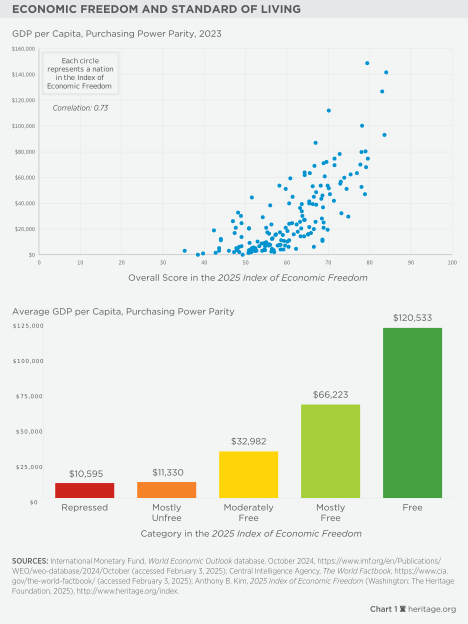
By a great many measures, over the past decades, countries that have adopted some version of free-market capitalism with businesses supported by efficient regulations and open to the free flow of goods, services, and capital have broken the vicious cycle of poverty and dependence.
Without question, the free-market system that is rooted in empowerment of the individual and open competition has fueled unprecedented economic growth in countries around the world. As Chart 2 illustrates, for more than two decades, as the global economy has moved toward greater economic freedom, the world economy has achieved real GDP expansion of around 70 percent. This progress has lifted hundreds of millions of people out of poverty.
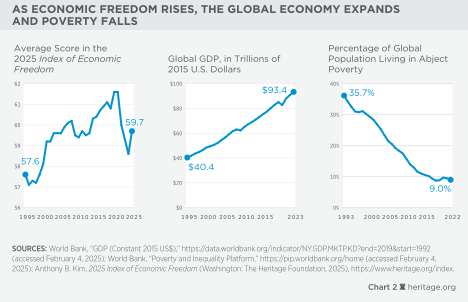
With global economic freedom rising steadily over the past two decades, the world has recorded significant economic expansion despite some ups and downs. Meanwhile, the global poverty rate has declined by about two-thirds. Opening the gates of prosperity to ever more people around the world, economic freedom has made the world a profoundly better place. More people are living longer and more fulfilling lives than ever before.
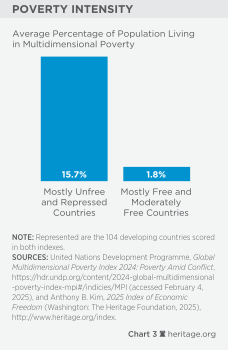
Greater economic freedom also has a significantly positive impact on levels of poverty. Poverty intensity as measured by the United Nations Development Programme’s Multidimensional Poverty Index (MPI), which assesses the nature and intensity of deprivation at the individual level in education, health outcomes, and standard of living, is also much lower on average in countries with higher levels of economic freedom. As depicted in Chart 3, the level of poverty in countries with economies that are considered “mostly free” or “moderately free” is only about one-fourth the level in countries that are rated “less free.”
Economic Freedom: Driving Vibrant Growth
Economic freedom is closely related to the openness to entrepreneurial activity that allows individuals to innovate, respond to new opportunities in the marketplace, and enjoy success based on their own efforts. Given this positive relationship, governments should be cautious in undertaking shortsighted stimulus programs that increase their own spending or add new layers of regulation, both of which reduce economic freedom.
The best results are likely to be achieved instead through policy reforms that improve the incentives that drive entrepreneurial activity. These reforms include improvements in the efficiency of business and labor regulations, reductions in tariffs and other barriers to trade or investment, and financial reforms to increase competition, ensure stability, and improve and broaden access to credit.
As documented in this edition of the Index, as well as in previous editions and volumes of academic research, vibrant and lasting economic growth is most likely to occur when governments implement policies that enhance economic freedom and empower individuals with greater choice and more opportunities. Advancing economic freedom is a proven policy for dynamic economic expansion and is likely to be the surest path to true progress for the greatest number of people.
As Chart 4 demonstrates, there is a robust relationship between improving economic freedom and achieving higher per capita economic growth. Whether long-term (25 years), medium-term (15 years), or short-term (five years), the relationship between changes in economic freedom and changes in economic growth is consistently positive. Improvements in economic freedom are a vital determinant of rates of economic expansion that the record shows will reduce poverty.
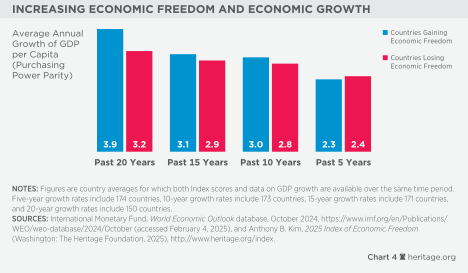
Undeniably, countries moving toward greater economic freedom tend to achieve more vibrant economic expansion over time. Throughout all the time periods considered, the average annual per capita economic growth rates of countries that have increased economic freedom the most are at least about 25 percent higher than those of countries in which freedom has stagnated or declined.
Economic Freedom: Ensuring Greater human Flourising and Political Freedom
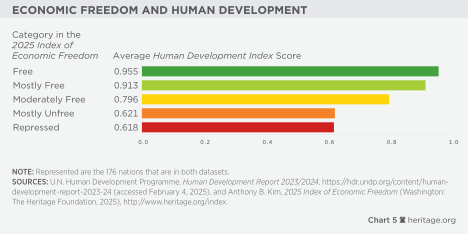
Increasing economic freedom is unequivocally about achieving greater overall prosperity that includes but also goes beyond the materialistic and monetary dimensions of well-being. The societal benefits of economic freedom extend far beyond higher incomes or lower rates of poverty. Countries with higher levels of economic freedom enjoy higher levels of overall human development as measured by the United Nations Human Development Index (HDI), which measures life expectancy, literacy, education, and standards of living in countries worldwide.
As Chart 5 shows, governments that choose policies that increase economic freedom are placing their societies on the path to more educational opportunities, better health care, and higher standards of living for their citizens.
In recent years, environmentally related government policies and actions have been more intrusive and economically distortionary. Many of the world’s governments are promoting programs to tax carbon emissions, increase taxes on gasoline, and set up nontransparent and economically harmful exchanges and marketplaces for the buying and selling of carbon emissions in addition to using government revenue to subsidize various types of so-called clean energy. Such policies impose a huge cost on society and retard economic growth. Fortunately, the same free-market principles that have proven to be the key to economic success can also deliver environmental success.
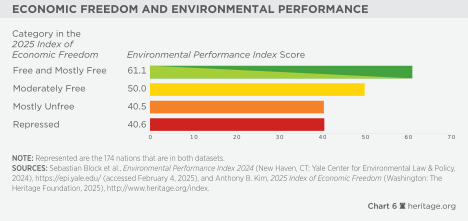
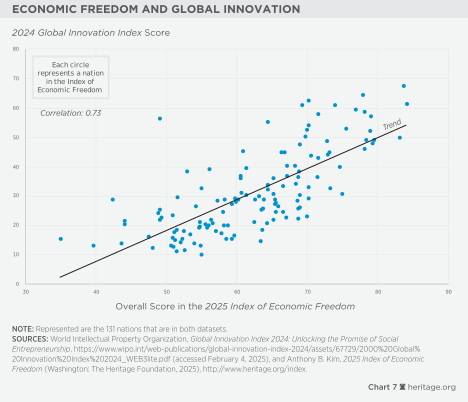
In countries around the world, economic freedom has been shown to increase the capacity for environmentally friendly innovation. The positive link between economic freedom and higher levels of innovation ensures greater capacity to cope with environmental challenges. Moreover, the most remarkable improvements in clean energy use and energy efficiency over the past decades have occurred not as a result of government regulation, but rather because of advances in economic freedom.
The regulatory power of the marketplace, which is generally ignored and certainly underappreciated by advocates of big government, pushes firms to identify ever more efficient means of production and respond to consumer demands for environmental cleanliness and sustainability. The result is a virtuous cycle of investment, innovation (including in greener technologies), and dynamic economic growth. (See Chart 6 and Chart 7.)
Greater economic freedom can also provide more fertile ground for effective and democratic governance. Admittedly, the achievement of political freedom through a well-functioning democratic system is a messy and often excruciating process, but the positive relationship between economic freedom and democratic governance is undeniable. (See Chart 8.)
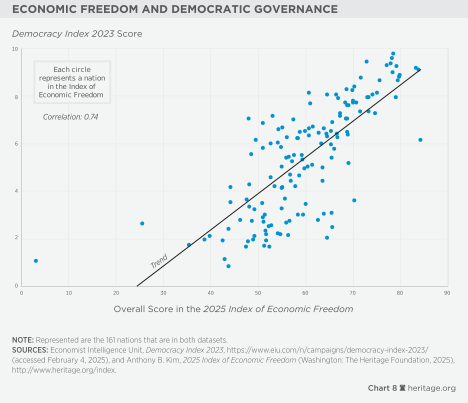
By empowering people to exercise greater control of their daily lives, economic freedom ultimately nurtures political reform by making it possible for individuals to gain the economic resources they can use to challenge entrenched interests or compete for political power, thereby encouraging the creation of more pluralistic societies. Pursuit of greater economic freedom is thus an important stepping-stone to democracy. It empowers the poor and builds the middle class.
Economic Freedom: The Foundation of Upward Mobility
The massive improvements in global indicators of income and quality of life in recent decades reflect a paradigm shift in the debate about how societies should be structured economically to achieve the most optimal outcomes. This debate has largely been won by free-market capitalism. Criticisms persist, however, based primarily on the inequality of outcomes in a system that rewards individual effort and ability, which differ within any population, and where differences in individuals’ starting positions can sometimes have a profound effect on their end results.
Alternatives to free-market capitalism, such as socialism, have proven to be both unequal to the task of eliminating inequality and counterproductive in that they tend to slow economic growth and thus reduce the resources that society has available to reduce poverty or pollution. Most advanced societies have thus opted for some version of free-market capitalism with various types of government intervention to redistribute resources within society. It is our hope that the Index of Economic Freedom’s data on governments’ tax, spending, and regulatory activities can shed light on the relative impact of such interventions.
Ultimately, discussions of inequality are more about a society’s values than they are about its economic system. At the heart of ensuring upward economic mobility is the task of advancing economic freedom so that dynamic and inclusive growth can occur meaningfully for all members of society. The evidence is strong that societies based on economic freedom are the societies in which social progress is strongest. Advancing economic freedom is really about putting in place growth-inducing pro-market policies that benefit the greatest possible number of people rather than a select few.
Time for Renewal, Not Retreat
The record is clear: Economically free and dynamic societies have demonstrated repeatedly that they are able to improve standards of living and respond effectively to any crises that may arise. This record includes countless individual stories of human progress and the achievements of countries and their citizens—billions of people around the world whose lives have measurably improved and who continue to strive for greater freedom. The path by which the global economy can emerge stronger than it was before runs through the renewal of commitments to the proven ideas of the free-market system.
From an economic policy perspective, the imperative now is for governments to avoid compounding the problem with ill-advised actions that distort markets, destroy incentives to work and innovate, or otherwise diminish the prospects for rapid recovery and growth. In the long run, the proven way to revitalize the economic life of societies in the most broad-based, meaningful way is by restoring what we know has worked best: economic freedom that has unambiguously made our societies strong, vibrant, and flourishing.